
Dirt, expired and untraceable food, cobwebs – the NATCP shut down a store and recalled food products due to serious violations
The National Authority for Trade and Consumer Protection (NATCP) uncovered serious food safety and hygiene violations during inspections of three different retail establishments. The violations uncovered clearly demonstrate that disregarding the rules not only has legal consequences but can also pose a direct threat to consumer health. The authority therefore took immediate action in every case, emphasizing that it applies a zero-tolerance policy toward practices that violate food safety.
An inspection conducted at the Brutál Diszkont store, which is subject to regulatory oversight, revealed that expired food products were found on the shelves, including items specifically intended for vulnerable consumer groups. In addition, several products lacked expiration dates and lot identification labels, posing a serious food safety risk.
The absence of these labels not only misleads consumers but also prevents the traceability of the products’ origin and journey. Such practices also raise suspicions of food fraud, given that the removal of labels may be intended to conceal the actual expiration date.
During an inspection conducted at the MARKET POINT retail outlet, the authority uncovered systemic deficiencies affecting several categories of food. The measures covered processed foods, freshly baked goods, and fresh produce.
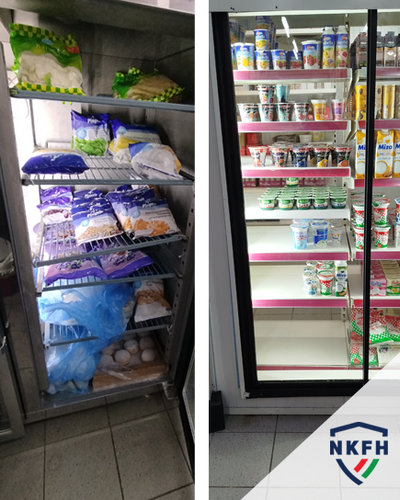
The inspection also identified several products without Hungarian-language labeling or with expired shelf lives, both on the shelves and in the refrigerators. The products in question included meat products, dairy products, sweets, and frozen foods. Since the sale of these products poses a direct food safety risk, the authority ordered the immediate removal of the affected items and prohibited their sale.
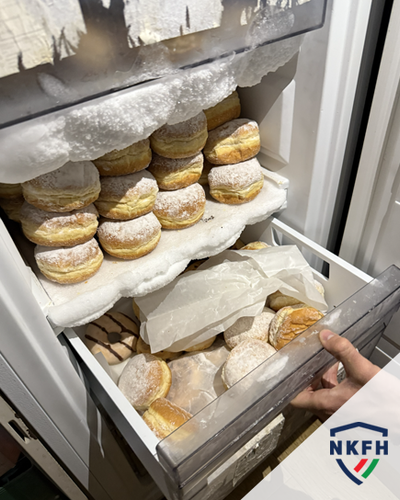
The authority also identified a significant quantity of untraceable products, particularly among locally baked pastries. In the case of certain types of doughnuts and filled pastries, neither batch identification nor proper labeling was provided, making it impossible to trace their origin and handling. Serious hygiene issues also arose during the storage of these products. The distribution of such products constitutes a serious violation of food chain safety regulations.
Further deficiencies were uncovered during the inspection of the fruit and vegetable supply; for several products, the country of origin, classification, and variety were not indicated, so consumers did not receive adequate information about the products’ origin and quality. Such labeling deficiencies not only violate consumer rights but also distort fair market competition.
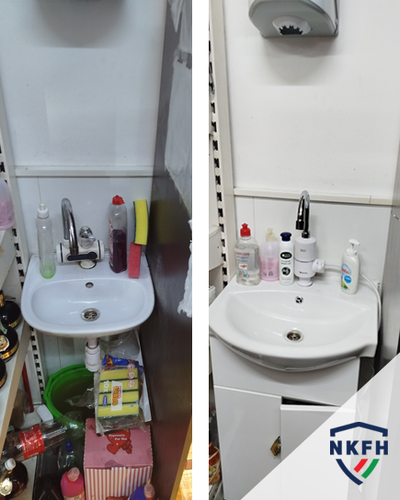
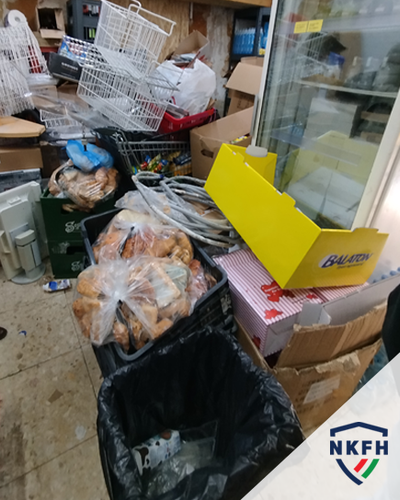
The conditions found at the AKCIÓPONT store, which was also inspected, were glaringly severe. Inspectors observed a dirty sales floor and warehouse, neglected, filthy, and rusty equipment, as well as general disorder. Cobwebs and accumulated grime hung from the ceiling, and the complete lack of cleaning was evident. The store was selling food products past their expiration dates—including baby food—and several products could not be traced in any way.
A particularly concerning circumstance was that unpackaged food was stored on the floor, while a dog was present in the sales area, cleaning supplies were scattered about, and disinfectant was placed in the immediate vicinity of the food. The lack of an HACCP system, the failure to maintain a temperature log, and deficiencies in employee training and medical fitness further increased the risk. The violations identified were so severe that the authority suspended the store’s operations with immediate effect. The facility was only allowed to reopen after a thorough cleaning and the rectification of the deficiencies.
The primary objective of food safety inspections is to protect the health and safety of consumers and to support businesses that comply with the law. Food that is expired, improperly stored, or of unknown origin poses serious health risks, particularly for children and other vulnerable groups, such as the elderly, pregnant women, and those with allergies or food sensitivities. Hygiene deficiencies, in turn, facilitate the proliferation of pathogens, which can even lead to mass outbreaks of illness. The authority’s inspections cover, among other things, the presence of hygiene conditions, labeling, and ensuring product traceability, as the rapid withdrawal of unsafe products cannot be guaranteed in the absence of these measures.
Following the inspections, the operators complied with their legal obligations, ensuring compliance with food safety and hygiene regulations, thus the authority’s action achieved its objective.
In addition to inspections, however, consumer awareness also plays an important role. Warning signs include, for example, a cluttered or dirty sales area, sticky counters, or trash or food scraps on the floor. It is also a cause for concern if refrigerators are dirty, frosted over, or visibly in poor working condition. When it comes to baked goods made on-site, customers can also do a lot to ensure their own safety if they know what conditions may indicate improper operation.
The handling of baked goods is particularly important: if products are displayed openly without protection, or if customers are not provided with tools (such as tongs or gloves) to handle them, this poses a hygiene risk. It is also a warning sign if customers are allowed to sort through baked goods with their hands, or if the staff does not follow basic hygiene rules. Crowding and disorder can also be telltale signs: if boxes, containers, or stock are piled up in the sales area or near the baked goods, this may indicate improper storage.
Another potential problem arises when different products are not kept separate, or when it is unclear when a product was made or by when it should be consumed. For ingredients that require refrigeration or filled baked goods, it is particularly important that refrigeration conditions are appropriate. If the cold chain is broken or food is stored at an inappropriate temperature, it can lead to rapid deterioration in quality and food safety risks.
The NATCP and the government agencies under its professional supervision rigorously monitor compliance with food safety regulations in the interest of consumers. At the same time, shoppers should exercise caution: if multiple warning signs are observed in a store, it is advisable to avoid making a purchase, as these conditions may endanger not only the quality of the product but also the health of consumers.
Share with others!
Facebook share
About Us
Who we are?Complaint
Where can I turn to?© 2026 - National Authority for Trade and Consumer Protection
Created by:


Készült a Digitális Állampolgárság Program keretében.